Within Roswell
Why Alien Body Claims Are Hard to Verify
The body stories are powerful but rely far more on later testimony than on the strongest 1947 record.
On this page
- What the 1947 record includes
- How body claims emerged later
- Why evidence type matters
Page outline Jump by section
Introduction
Alien body claims are the most dramatic part of the modern Roswell UFO crash story, but they are also among its hardest claims to verify. The strongest 1947 record describes recovered debris, a ranch, military handling, and a short-lived “flying saucer” announcement; it does not describe bodies, autopsies, coffins, survivors, or biological material. The body stories became prominent later, especially after Roswell was revived in UFO literature from 1980 onwards. That timing matters because the evidence base shifts from contemporary documentation to retrospective testimony, second-hand accounts, posthumous statements, and disputed reconstructions.[Wikisource]en.wikisource.orgRAAF Captures Flying Saucer on Ranch in Roswell RegionRoswell Daily Record/1947/RAAF Captures Flying Saucer on Ranch in Roswell Region - Wikisource, the free online library…
This does not mean every witness should be dismissed casually. Some witnesses were real people with real connections to Roswell, the military, local funeral work, or later UFO research. The problem is evidential: claims about bodies require a higher standard of support than claims about debris, and the available support is weaker, later, more contradictory, and often impossible to check independently. Official U.S. Air Force and National Archives material says later body stories were not supported by records of recovered extraterrestrial remains and may have drawn on memories of later dummy drops, aircraft accidents, and balloon mishaps.[National Archives]archives.govNational Archives Project BLUE BOOKNational ArchivesProject BLUE BOOK - Unidentified Flying Objects | National Archives…
What the 1947 Record Includes
The contemporary Roswell record is striking, but in a narrower way than the later legend suggests. On 8 July 1947, the Roswell Daily Record reported that the intelligence office of the 509th Bombardment Group had announced it had “come into possession of a flying saucer”. The article said the object was recovered on a ranch after a rancher notified Sheriff George Wilcox, that Major Jesse Marcel and a military detail collected the “disk”, and that it was flown to “higher headquarters”. The same report also noted that no construction details or appearance details had been released.[Wikisource]en.wikisource.orgRAAF Captures Flying Saucer on Ranch in Roswell RegionRoswell Daily Record/1947/RAAF Captures Flying Saucer on Ranch in Roswell Region - Wikisource, the free online library…
That article is central to Roswell because it anchors the case in a real military statement and a real newspaper report. Yet it is also important for what it does not say. There is no mention in that article of alien occupants, dead bodies, injured beings, hospital activity, child-sized coffins, an autopsy, a second crash site, or a biological recovery. The 1947 public record is therefore much stronger for a debris recovery and a confused or misleading official announcement than it is for recovered beings.
This difference is not a technicality. A debris claim and a body claim do not carry the same evidential burden. Debris can be misidentified, substituted, photographed poorly, or explained later as a secret military balloon. Bodies would imply a far larger recovery operation: medical personnel, security, transport, storage, documentation, witnesses, and a chain of custody. The absence of contemporary body references does not prove that no such event occurred, but it does mean the body narrative starts from a weaker documentary base than the debris narrative.
The later government review was itself triggered by the persistence of Roswell claims. The Government Accountability Office inquiry noted that speculation had continued for nearly 50 years and that some observers believed the object was extraterrestrial; it also framed the inquiry around whether government records existed concerning the crash and related reporting requirements.[FAS Project on Government Secrecy]sgp.fas.orgProject on Government Secrecy GAO Report on Roswell, NM UFO CrashFAS Project on Government SecrecyGAO Report on Roswell, NM UFO Crash… The National Archives summary of the Air Force research states that the recovered materials were consistent with a balloon device from a classified project and that no records indicated or hinted at recovery of alien bodies or extraterrestrial materials.[National Archives]archives.govNational Archives Project BLUE BOOKNational ArchivesProject BLUE BOOK - Unidentified Flying Objects | National Archives…

How Body Claims Emerged Later
The alien body element did not dominate the earliest public Roswell story. It grew as Roswell was reconstructed decades after 1947, especially after the case was revived by UFO researchers and popular books. WIRED’s history of the case notes that Roswell had been “almost entirely forgotten” when Charles Berlitz and William Moore published The Roswell Incident in 1980, building heavily on later testimony from Jesse Marcel about unusual debris. The same account describes the book’s body claim as relying on testimony attributed to the deceased civil engineer Grant “Barney” Barnett, who supposedly encountered a crashed disc and bodies on the Plains of San Agustin with archaeology students from an unnamed university.[WIRED]wired.comHere’s the Proof There’s No Government Alien Conspiracy Around Roswell | WIREDHere’s the Proof There’s No Government Alien Conspiracy Around Roswell | WIRED…
That is a major evidence problem. The Barnett story was not a contemporary 1947 report from a named, cross-examinable witness producing physical evidence. It was a later, second-hand story attributed to a man who was no longer alive. It also shifted the geography of the case: the Plains of San Agustin story is not simply the same as the ranch debris recovery near Roswell. Once a claim depends on a different location, unnamed students, and an unavailable witness, verification becomes much harder.
The body narrative then expanded through further witness claims. One of the best-known is Glenn Dennis, a Roswell mortician who later said he received inquiries from the air base about child-sized coffins and embalming bodies exposed to the weather. TIME described Dennis as a notable source for later Roswell body accounts, reporting that he said the base contacted him about coffin availability and procedures for bodies that had been exposed for days.[Time]content.time.comDID ALIENS REALLY LAND?DID ALIENS REALLY LAND?
Dennis’s story is powerful because it has local texture: a mortician, a military hospital, coffin questions, and a nurse allegedly connected to an autopsy. But that same texture creates checkable points, and those points have not produced decisive confirmation. The alleged nurse was difficult to verify, the story depended heavily on Dennis’s later recollection, and public scrutiny raised doubts about details. The result is not a clean primary record of alien bodies; it is a memorable witness narrative with unresolved verification problems.
Walter Haut, the Roswell Army Air Field public information officer who issued the original 1947 press release, is another important figure. Haut’s early role is not disputed: he was connected to the initial “flying disc” announcement. The problem is that the strongest body-related claims associated with him appeared much later, including a posthumously released statement presented by Roswell researchers after his death. Late-life and posthumous statements can matter, but they are weaker than contemporary records because they are harder to question, contextualise, and test against immediate documentation.
Why Evidence Type Matters
The body claims ask the reader to accept not merely that Roswell involved unusual wreckage, but that the U.S. military recovered non-human biological beings and successfully concealed the proof for decades. That is a much larger claim, and it requires more than cumulative atmosphere. It needs evidence that is early, specific, independent, and preferably physical.
A useful way to assess the body evidence is to separate it into categories:
- Contemporary documents: The strongest category would be 1947 records mentioning bodies, medical handling, autopsy orders, biological samples, morgue activity, or unusual security around remains. Publicly available official summaries say such records were not found.
- First-hand testimony: A named person saying they personally saw bodies is stronger than a story about what someone else allegedly saw, but it still needs consistency, timing, and corroboration.
- Second-hand testimony: Stories from relatives, friends, researchers, or later interviewers may preserve genuine memories, but they are more vulnerable to distortion, conflation, and narrative shaping.
- Posthumous statements: These can be sincere, but they are hard to probe. The witness cannot clarify contradictions or respond to challenges.
- Physical evidence: A verified biological sample, medical photograph with provenance, chain-of-custody record, or recoverable body-related artefact would matter far more than recollection alone.
By those standards, the Roswell body claims remain weak. The evidence is heavily weighted towards recollection, second-hand transmission, and late publication rather than contemporaneous documentation or testable material. The official Air Force “Case Closed” summary argues that accounts of alien bodies were likely produced by the compression of events from different years into a supposed two- or three-day sequence in July 1947. It specifically identifies anthropomorphic test dummies carried by high-altitude balloons, balloon recovery operations, a 1956 KC-97 aircraft accident, and a 1959 manned balloon mishap as possible sources for later body-related memories.[U.S. Air Force]af.milThe Roswell Report…
That official explanation has its own controversy. Critics often point out that crash-test dummy operations cited by the Air Force occurred after 1947, not during the original Roswell recovery. But the Air Force argument is not that dummies were on the 1947 Project Mogul balloon. It is that later witnesses and storytellers may have folded separate New Mexico military events from later years into a Roswell-centred memory. Whether that fully explains every account is debatable, but it directly addresses a key feature of the body stories: many are late, retrospective, and vulnerable to conflation.
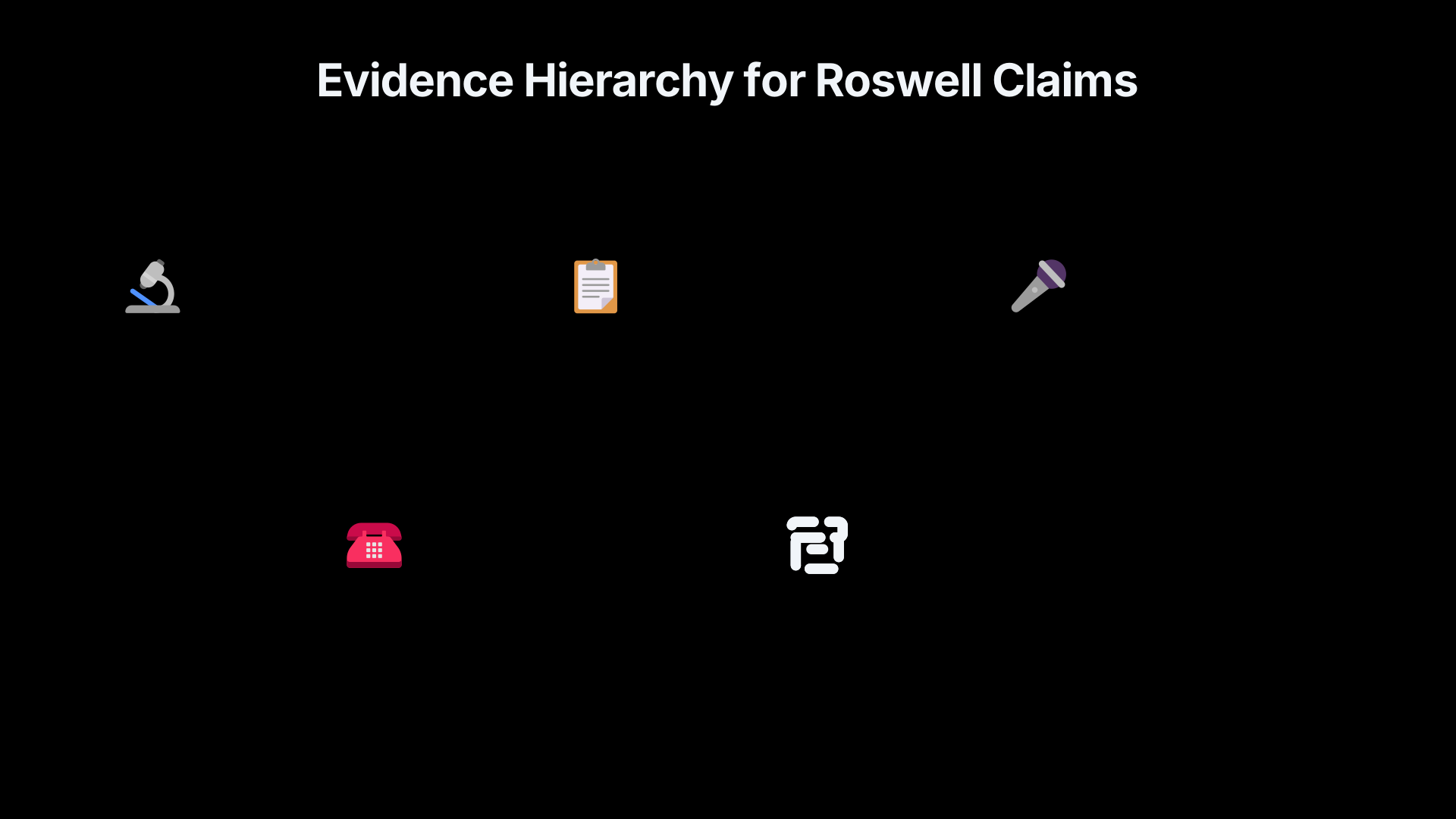
The Recurring Verification Problems
The body claims are not all the same, but they tend to suffer from recurring weaknesses. These weaknesses do not automatically prove fraud. They do explain why the claims remain difficult to verify.
The timing gap is large. A claim first recorded decades after the event is not worthless, but it is not equivalent to a 1947 medical log, security order, photograph, or newspaper report. Memory can preserve important experiences, yet it can also be reshaped by repeated interviews, books, documentaries, community expectations, and later cultural imagery.
The claims often arrive through intermediaries. The Barney Barnett body story was attributed after the fact; the archaeology students were unnamed; some later body stories came through family members or researchers rather than direct contemporary records. Each extra layer between event and evidence increases the risk of error.
Locations and scenarios multiply. The more Roswell expanded, the more it included multiple crash sites, multiple craft, varying body counts, and different recovery settings. That growth makes the legend more vivid but less tidy as evidence. A single, well-documented incident is easier to test than a shifting cluster of overlapping claims.
The medical and logistical trail is missing. Bodies would imply doctors, guards, drivers, storage facilities, paperwork, contamination precautions, photographs, and long-term custody. The absence of a robust independent trail is a central problem for the body narrative.
Pop culture fed back into memory. By the 1990s, Roswell bodies had become a cultural image, reinforced by television, films, books, museums, and hoaxes. The 1995 “alien autopsy” film illustrates the danger. It was marketed as connected to a Roswell-era alien body and attracted wide attention, but Ray Santilli later admitted the film sold to broadcasters was fake, though he claimed it was based on damaged original footage. TIME reported that the hoax involved a constructed set, actors, and a fabricated “restoration”.[Time]time.comOpen source on time.com.
The autopsy film is not the same as the main Roswell witness testimony, but it shows how body imagery can become persuasive without reliable provenance. In body claims, provenance is everything: who had the material, when, how it was preserved, who examined it, and whether it can be independently tested.
What Would Make the Body Claims Stronger
The body claims would become much more credible if they were supported by evidence that did not depend mainly on late memory. The most useful evidence would be specific and independently checkable: a 1947 document naming a recovery of biological remains, a medical record with verifiable origin, a photograph with a secure chain of custody, a physical sample that could be tested by independent laboratories, or multiple unrelated first-hand accounts recorded before Roswell became culturally famous.
The standard should not be impossibly high, but it should match the claim. For ordinary historical disputes, testimony may be enough to establish broad plausibility. For the claim that alien bodies were recovered at Roswell, testimony alone has to carry a far heavier load. It must overcome the lack of contemporary body documentation, the official finding that no alien-body records were found, the known existence of secret but human military balloon projects, and the later cultural environment in which Roswell body stories became famous.[National Archives]archives.govNational Archives Project BLUE BOOKNational ArchivesProject BLUE BOOK - Unidentified Flying Objects | National Archives…
This is why the debris story and the body story should be evaluated separately. The debris story rests on a documented 1947 recovery, a real press release, and a real reversal. The body story rests mainly on claims that surfaced or became prominent much later. A person can reasonably think the military handled the debris story poorly, or that secrecy around Project Mogul encouraged suspicion, without accepting that alien bodies were recovered.
The Best Evidence-Based Reading
The most careful reading is that Roswell’s alien body claims are historically influential but evidentially fragile. They explain why Roswell became more than a dispute about balloon debris; bodies turned it into a story about hidden contact, biological proof, and government concealment. But the stronger the claim became, the weaker its direct evidential footing often looked.
The 1947 record supports a recovered object and confused or misleading public communication. It does not provide contemporary support for bodies. Later body stories added emotional force and memorable detail, but they depended heavily on retrospective testimony, second-hand accounts, uncertain witnesses, and sometimes posthumous documents. Official investigations found no records of recovered alien bodies or extraterrestrial material, and the Air Force proposed later human military events as sources for some body memories.[wikisource.org]en.wikisource.orgRAAF Captures Flying Saucer on Ranch in Roswell RegionRoswell Daily Record/1947/RAAF Captures Flying Saucer on Ranch in Roswell Region - Wikisource, the free online library…
That leaves the body claims in a distinctive position within the Roswell UFO crash story. They are central to the legend, but not central to the strongest evidence. They are worth studying because they show how Roswell evolved from a 1947 debris incident into a modern mythology of hidden bodies and suppressed proof. They are hard to verify because the evidence that would matter most is exactly what has not appeared: contemporaneous, independent, physical, and specific proof of recovered non-human remains.
Amazon book picks
Further Reading
Books and field guides related to Why Alien Body Claims Are Hard to Verify. Use these as the next step if you want deeper reading beyond the article.
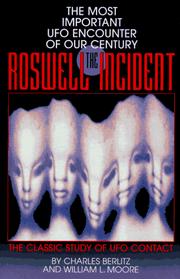
Roswell Incident
Important for understanding when and how alien-body stories entered the Roswell narrative.
UFO Crash at Roswell
Directly addresses how Roswell narratives evolved, including the emergence and reliability of later alien-body claims.
Witness to Roswell
Focuses heavily on witness testimony and body-recovery claims, making it useful for evaluating evidential strengths and weaknesses.
Crash at Corona
Explores witness accounts, alleged recovered bodies, and the arguments surrounding disputed evidence.
eBay marketplace picks
Marketplace Samples
Example marketplace items related to this page. Use the search link to explore similar finds on eBay.

Endnotes
1.
Source: en.wikisource.org
Title: RAAF Captures Flying Saucer on Ranch in Roswell Region
Link:https://en.wikisource.org/wiki/Roswell_Daily_Record/1947/RAAF_Captures_Flying_Saucer_on_Ranch_in_Roswell_Region
Source snippet
Roswell Daily Record/1947/RAAF Captures Flying Saucer on Ranch in Roswell Region - Wikisource, the free online library...
2.
Source: wired.com
Title: Here’s the Proof There’s No Government Alien Conspiracy Around Roswell | WIRED
Link:https://www.wired.com/story/roswell-aliens-fermi-paradox/
Source snippet
Here’s the Proof There’s No Government Alien Conspiracy Around Roswell | WIRED...
3.
Source: archives.gov
Title: National Archives Project BLUE BOOK
Link:https://www.archives.gov/research/military/air-force/ufos
Source snippet
National ArchivesProject BLUE BOOK - Unidentified Flying Objects | National Archives...
4.
Source: af.mil
Title: U.S. Air Force
Link:https://www.af.mil/The-Roswell-Report/
Source snippet
The Roswell Report...
5.
Source: sgp.fas.org
Title: Project on Government Secrecy GAO Report on Roswell, NM UFO Crash
Link:https://sgp.fas.org/othergov/roswell.html
Source snippet
FAS Project on Government SecrecyGAO Report on Roswell, NM UFO Crash...
6.
Source: content.time.com
Title: DID ALIENS REALLY LAND?
Link:https://content.time.com/time/subscriber/article/0%2C33009%2C986565-3%2C00.html
7.
Source: time.com
Link:https://time.com/4376871/alien-autopsy-hoax-history/
8.
Source: archives.gov
Link:https://www.archives.gov/research/topics/uaps/moving-images-and-sound
9.
Source: history.com
Title: u s air force reports on roswell
Link:https://www.history.com/this-day-in-history/june-24/u-s-air-force-reports-on-roswell
10.
Source: time.com
Title: aliens or dummies
Link:https://time.com/archive/6930414/aliens-or-dummies/
11.
Source: Wikipedia
Title: Roswell incident
Link:https://en.wikipedia.org/wiki/Roswell_incident
12.
Source: Wikipedia
Title: Walter Haut
Link:https://en.wikipedia.org/wiki/Walter_Haut
13.
Source: Wikipedia
Title: Glenn Dennis
Link:https://en.wikipedia.org/wiki/Glenn_Dennis
14.
Source: britannica.com
Title: Roswell incident
Link:https://www.britannica.com/event/Roswell-incident
15.
Source: lflank.wordpress.com
Title: the roswell ufo crash
Link:https://lflank.wordpress.com/2016/10/11/the-roswell-ufo-crash/
16.
Source: muller.lbl.gov
Title: Roswell Incident
Link:https://muller.lbl.gov/teaching/physics10/Roswell/RoswellIncident.html
17.
Source: jhmovie.fandom.com
Title: Roswell incident
Link:https://jhmovie.fandom.com/wiki/Roswell_incident
Additional References
18.
Source: youtube.com
Link:https://www.youtube.com/watch?v=C3XukmzUMck
Source snippet
Roswell alien body claims evidence problems air force report 1997-06-24: ABC Reports USAF's Roswell Explanation Tom Owens UAP...
19.
Source: youtube.com
Title: Roswell Alien Autopsy: Real Footage or the Greatest UFO Hoax Ever?
Link:https://www.youtube.com/watch?v=cIcVrgzSbHg
Source snippet
Reel America: "The Roswell Reports" - 1997 U.S. Air Force Film...
20.
Source: youtube.com
Title: Reel America: “The Roswell Reports”
Link:https://www.youtube.com/watch?v=m7rVSri-7es
Source snippet
Non-Human BODIES Recovered in New Mexico | 1947 Roswell "UFO" Crash...
21.
Source: youtube.com
Link:https://www.youtube.com/watch?v=nPhtkhzCy4g
Source snippet
Roswell Revealed: The Truth Behind the 1947 UFO Crash...
22.
Source: nsa.gov
Link:https://www.nsa.gov/Helpful-Links/NSA-FOIA/Declassification-Transparency-Initiatives/FOIA-Reports-and-Releases/FOIA-Reports-and-Releases-List/igphoto/2002761379/
23.
Source: reddit.com
Link:https://www.reddit.com/r/UFOB/comments/1ktk70r/deathbed_affidavit_written_by_walter_haut_public/
24.
Source: commons.wikimedia.org
Title: File:Roswell Daily Record
Link:https://commons.wikimedia.org/wiki/File%3ARoswell_Daily_Record._July_8%2C_1947._RAAF_Captures_Flying_Saucer_On_Ranch_in_Roswell_Region.webp
Published: July 8, 1947
25.
Source: sacred-texts.com
Link:https://sacred-texts.com/ufo/roswel07.htm
26.
Source: standard.co.uk
Link:https://www.standard.co.uk/hp/front/roswell-officers-amazing-deathbed-admission-raises-possibility-that-aliens-did-visit-6594156.html
27.
Source: academia.edu
Link:https://www.academia.edu/4003190/The_Most_Comprehensive_Account_of_the_Roswell_Incident_You_Ever_Did_See
Topic Tree