Within Roswell
What Evidence Should Roswell Beginners Read First?
A careful reader can begin with the strongest records before moving to later claims and disputed interpretations.
On this page
- Contemporary newspaper sources
- Official reports
- Later witness claims
Page outline Jump by section
Introduction
The best way into Roswell is not to begin with the most dramatic alien-body stories. Start with the records closest to July 1947, then read the official investigations, and only after that compare later witness claims. This order matters because the strongest Roswell evidence is not one single “smoking gun”, but a layered record: a real debris recovery, a real military press release using “flying saucer” language, a rapid official reversal, a later government explanation involving Project Mogul, and decades of disputed recollections that grew after the event.
For beginners, the priority should be simple: read sources in the order least likely to have been shaped by later Roswell mythology. The contemporary newspaper and FBI material shows what was said at the time. The official reports explain why the U.S. Air Force later identified the debris as a balloon-borne research device. Later witness claims are worth reading, but only after the reader can separate first-hand, near-contemporary evidence from memories, retellings, and interpretations published many years later.
Start with the 1947 record before the legend
The first document many readers should read is the 8 July 1947 Roswell Daily Record story headed “RAAF Captures Flying Saucer On Ranch in Roswell Region”. Its value is not that it proves an alien spacecraft crashed. Its value is that it fixes the public starting point: the intelligence office of the 509th Bombardment Group at Roswell Army Air Field was reported as saying it had come into possession of a “flying saucer”, recovered after a rancher contacted Sheriff George Wilcox and Major Jesse Marcel became involved.[Wikisource]The 8 July 1947 Roswell Daily Record article.Open source on wikisource.org.
This story deserves careful reading because it shows both the strength and the limit of the earliest evidence. The strong part is the official-sounding chain: rancher, sheriff, Army Air Field, intelligence officer, higher headquarters. The weaker part is that the article says no details of the saucer’s construction or appearance had been revealed, which means it does not provide a technical description of an extraordinary craft. It is a contemporary record of a startling announcement, not a contemporary inspection report proving extraterrestrial origin.[Wikisource]The 8 July 1947 Roswell Daily Record article.Open source on wikisource.org.
Readers should also notice the same front-page article’s separate account from Mr and Mrs Dan Wilmot, who reported seeing a glowing oval object days earlier. That sighting is often interesting to Roswell readers, but it should not be quietly merged with the ranch debris. The newspaper itself presents it as a local sighting that happened near the same period, not as a documented observation of the recovered material. Keeping those two claims separate is one of the first habits a careful Roswell reader should develop.[Wikisource]The 8 July 1947 Roswell Daily Record article.Open source on wikisource.org.
The second contemporary source to read is the 9 July press coverage about rancher W. W. “Mac” Brazel and the debris description. Later retellings often emphasise metal, indestructibility, bodies, or a crash site. The near-contemporary descriptions are much plainer: rubber strips, tinfoil, tough paper and sticks. That does not settle every dispute, because Brazel also reportedly said it was not like any weather balloon he had seen. But it anchors the argument in material details that fit awkwardly with later stories of a recognisable spacecraft and fit more naturally with balloon-and-radar-reflector explanations.[Wikipedia]The 9 July debris descriptions and immediate retraction coverage.Open source on wikipedia.org.
Read the FBI teletype as a bridge record
After the newspaper accounts, the FBI teletype from 8 July 1947 is one of the most useful bridge documents. The FBI Vault identifies a Dallas Field Office teletype about the Roswell “flying disc”, and the GAO later summarised the same kind of record as reporting that the military described an object resembling a high-altitude weather balloon with a radar reflector recovered near Roswell.[FBI]vault.fbi.gov— Federal Bureau of Investigation— Federal Bureau of Investigation
This document matters because it sits between the sensational public announcement and the later official balloon explanation. It does not look like a modern debunking written decades after the fact. It is part of the immediate 1947 information stream. Its reported description — a hexagonal disc suspended from a balloon by cable, resembling a high-altitude weather balloon with a radar reflector — gives readers a concrete alternative to two simplistic narratives: “the Army found a saucer” and “nothing happened”. Something did happen; the issue is what kind of airborne equipment it was.[FAS Project on Government Secrecy]fas.orgProject on Government Secrecy GAO Report on Roswell, NM UFO Crash The FBI message stated that the military had reported that an object reProject on Government Secrecy GAO Report on Roswell, NM UFO Crash The FBI message stated that the military had reported that an object re
A useful beginner’s question is: does a source describe the recovered debris, or does it interpret the debris? The FBI-related account is valuable because it includes a physical description that can be compared with Project Mogul equipment and radar targets. It is less useful for judging later claims about bodies, because it does not report bodies.
Use official reports for the technical case, not as the only word
The U.S. Air Force’s 1994 and 1997 Roswell reports should come next, not first. They are official, detailed, and indispensable, but they were written decades after the incident in response to public and congressional pressure. The 1994 Air Force research concluded that the material recovered near Roswell was consistent with a balloon device and most likely came from one of the unrecovered Project Mogul balloon trains.[WHS ESD]The 1994 Air Force report on Project Mogul.Open source on whs.mil.
Project Mogul is the key technical explanation beginners need to understand. It was not an ordinary backyard weather balloon story. It was a classified balloon-borne research programme connected to early Cold War efforts to detect Soviet nuclear tests. Smithsonian’s account stresses that this secrecy helps explain why the military could prefer a vague or misleading public explanation rather than reveal the real programme.[Smithsonian Magazine]smithsonianmag.comin 1947 high altitude balloon crash landed roswell aliens never left 180963917in 1947 high altitude balloon crash landed roswell aliens never left 180963917
That distinction is central. A reader who stops at “weather balloon” may reasonably wonder why the Army behaved so strangely. A reader who understands Project Mogul sees why ordinary-looking debris could still be connected to a classified project. The secrecy does not prove an alien recovery, but it does explain why the first official explanation looked evasive and why later suspicion found such fertile ground.[Smithsonian Magazine]smithsonianmag.comin 1947 high altitude balloon crash landed roswell aliens never left 180963917in 1947 high altitude balloon crash landed roswell aliens never left 180963917
The 1997 Air Force report, “The Roswell Report: Case Closed”, is especially relevant for later alien-body stories. Its executive summary argues that many later “alien” accounts appear to describe events from other years, including anthropomorphic test dummies carried by high-altitude balloons, military recovery operations, and two separate Air Force accidents in 1956 and 1959.[U.S. Air Force]The 1997 Air Force report on body claims.Open source on af.mil.
Readers should use the official reports critically but seriously. They are strongest when matching debris descriptions, balloon technology, classified programme context, and records searches. They are less satisfying when they ask readers to accept that later memories from different years became compressed into a 1947 narrative. That kind of memory-conflation explanation is plausible, but it requires the reader to compare the witness claims carefully rather than dismissing them unread.
Put the GAO records search near the centre of the reading list
The Government Accountability Office report is not a UFO report in the dramatic sense. It is a records-search report, and that is exactly why it is valuable. Published in July 1995 after a congressional request, it examined reporting requirements and federal records concerning the 1947 crash near Roswell.[GAO]gao.govnsiadnsiad
The GAO report gives beginners a way to separate “no evidence” from “missing records”. GAO reported that its search found two records originating in 1947: a July 1947 history report by the combined 509th Bomb Group and Roswell Army Air Field, and an FBI teletype dated 8 July 1947. It also found that some Roswell Army Air Field records for the relevant broader period had been destroyed, with the disposition form not showing who destroyed them, when, or under what authority.[GAO]gao.govNSIAD-95-187 Government RecordsNSIAD-95-187 Government Records
That finding is important because both sides can overstate it. The missing records do not prove a spacecraft cover-up; records can be destroyed for mundane administrative reasons. But the absence of some records also means readers should be wary of claims that the documentary trail is perfectly complete. The best conclusion is narrower: the surviving official record supports a balloon-related explanation more strongly than an alien-craft explanation, but the archival record is not as full as a modern reader might wish.[Justia GAO Reports]gao.justia.comGAO Reports NSIADGAO Reports NSIAD
Treat photos and the Ramey memo as disputed, not decisive
The Fort Worth photographs of Brigadier General Roger Ramey, Major Jesse Marcel and debris are a natural next stop because they are visual, contemporary and often reproduced. They show people and material connected to the public reversal, but they do not by themselves answer whether the displayed debris was the original ranch material, a substituted weather device, or a representative sample used for the press. That dispute is why the photos matter.
The “Ramey memo” — a paper visible in Ramey’s hand in one photograph — attracts special attention because some researchers argue that enhanced versions contain words suggestive of a crash or victims. The safer beginner position is to treat it as an unresolved interpretive object rather than a foundation stone. The University of Texas at Arlington’s Roswell photograph collection has been a focus for memo analysis, and researchers continue to debate what, if anything, can be reliably read from the image.[UTA Libraries]sites.libraries.uta.eduOpen source on uta.edu.
The practical rule is simple: do not begin Roswell with image enhancement claims. Read them after the newspapers, FBI material, GAO report and Air Force reports. A blurred or partially obscured document can raise questions, but it should not outweigh clearer contemporary records unless the reading is independently reproducible and less ambiguous than the competing explanations.

Read later witness claims last, but do not ignore them
Later witness claims are part of Roswell’s history because they transformed a brief 1947 news episode into a lasting UFO case. The modern Roswell story revived after UFO researcher Stanton Friedman interviewed Jesse Marcel in the late 1970s; the 1980 book The Roswell Incident by Charles Berlitz and William Moore then helped popularise Marcel’s claim that the debris was not a conventional balloon and introduced broader crash-and-body narratives.[NSA]nsa.govOpen source on nsa.gov.
For beginners, the first question about any later claim should be: what did this person directly see in 1947? That question immediately separates several categories:
- First-hand debris witnesses: people who claimed to see or handle recovered material.
- Second-hand family accounts: relatives reporting what someone later told them.
- Operational witnesses: people claiming involvement in transport, recovery, hospital, mortuary or security activity.
- Late affidavits and deathbed statements: claims made or released many decades after the event.
- Researcher reconstructions: narratives assembled from multiple interviews, sometimes with disputed timelines or locations.
This does not mean all late claims are worthless. Memories from participants can add leads, especially when they identify names, locations, procedures or material details that can be checked. But late Roswell testimony is unusually vulnerable to contamination from books, television, anniversary coverage, museum culture and earlier UFO legends. Smithsonian’s account notes that by the late 1970s and early 1980s, a surge of extraterrestrial interest in films, books and popular culture helped bring alien ideas back into the public imagination, creating the environment in which Roswell expanded far beyond the original debris story.[Smithsonian Magazine]smithsonianmag.comin 1947 high altitude balloon crash landed roswell aliens never left 180963917in 1947 high altitude balloon crash landed roswell aliens never left 180963917
The most cautious way to read Jesse Marcel is to give him significance without making him decisive. He was directly connected to the 1947 recovery and transport of debris, so his recollections matter more than many later accounts. But his strongest extraterrestrial claims became prominent decades after the event, and they should be compared against the 1947 material descriptions, the FBI teletype, Project Mogul records and other participants’ accounts.[NSA]nsa.govOpen source on nsa.gov.
Alien-body claims require an even higher threshold. The 1947 newspaper and FBI records do not report bodies. The 1997 Air Force report argued that later body-recovery accounts may have drawn on memories of 1950s dummy tests and Air Force accidents, not July 1947 events. Readers do not have to accept every detail of that official explanation to recognise the evidence problem: body stories are later, more varied, and less firmly anchored to the immediate 1947 record than the debris recovery.[U.S. Air Force]The 1997 Air Force report on body claims.Open source on af.mil.
A practical reading order for Roswell beginners
A careful reader should work through the Roswell evidence in this order:
-
The 8 July 1947 Roswell Daily Record article. Read it for the original military-linked “flying saucer” announcement and for what it does not describe: no construction details, no bodies, no technical examination. Wikisource
-
The 9 July debris descriptions and immediate retraction coverage. Use these accounts to understand the plain material descriptions — rubber, foil, paper and sticks — that later narratives must either explain or challenge. Wikipedia
-
The FBI teletype and GAO summary of the 1947 records. These help connect the “disc” language to a balloon-and-radar-reflector description while also showing that the surviving archival trail is limited. FAS Project on Government Secrecy
-
The 1994 Air Force report on Project Mogul. Read it for the best-developed official explanation of the debris and the Cold War secrecy problem. WHS ESD
-
The 1997 Air Force report on body claims. Read it separately from the debris report, because “what fell?” and “why did later people report bodies?” are related but distinct questions. U.S. Air Force
-
Later witness interviews, affidavits and UFO-research books. Read these only after the documentary baseline is clear, and sort each claim by date, proximity, whether it is first-hand, and whether it matches or contradicts the earlier record.
What this evidence sequence changes
Reading Roswell in this order changes the case from a simple argument about belief into a more manageable evidence problem. The strongest documents show that a real recovery occurred, that the Army’s public language was unusually dramatic, and that the official explanation shifted quickly. They also show that the best-documented physical descriptions are compatible with balloon equipment and radar-reflector material, not with a recognisable spacecraft.
The official record is strongest on the debris explanation and weaker as a complete explanation for why every later witness remembered what they remembered. Later testimony is most valuable when it can be tested against contemporary records; it is weakest when it asks the reader to accept large new claims — bodies, multiple crash sites, intact craft, secret autopsies — without near-contemporary support.
For beginners, the point is not to decide every Roswell controversy in one sitting. It is to build the case from the ground up: first the July 1947 record, then the government records search, then the technical balloon explanation, and finally the later claims that made Roswell famous. That sequence gives the reader the best chance of seeing why Roswell remains culturally powerful while also recognising which parts of the evidence are strongest, weakest, and most disputed.
Amazon book picks
Further Reading
Books and field guides related to What Evidence Should Roswell Beginners Read First?. Use these as the next step if you want deeper reading beyond the article.
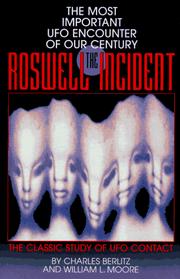
Roswell Incident
Introduced the modern Roswell debate and provides essential context for understanding later claims.
Witness to Roswell
Collects witness testimony and represents the major pro-Roswell case many readers encounter.
Crash at Corona
Expands the Roswell narrative and is frequently cited in discussions of the evidence.
The Roswell Report: Case Closed
Presents the Air Force's Project Mogul-based interpretation and balances a beginner reading list.
eBay marketplace picks
Marketplace Samples
Live-tested eBay searches with available results related to this page.

Endnotes
3.
Source: vault.fbi.gov
Title: — Federal Bureau of Investigation
Link:https://vault.fbi.gov/Roswell%20UFO
7.
Source: gao.gov
Title: nsiad 95 187
Link:https://www.gao.gov/products/nsiad
8.
Source: gao.gov
Title: NSIAD-95-187 Government Records
Link:https://www.gao.gov/assets/nsiad-95-187.pdf
9.
Source: gao.justia.com
Title: GAO Reports NSIAD-95-187
Link:https://gao.justia.com/department-of-defense/1995/7/government-records-nsiad-95-187/
10.
Source: sites.libraries.uta.edu
Link:https://sites.libraries.uta.edu/roswell/node/21
11.
Source: nsa.gov
Link:https://www.nsa.gov/portals/75/documents/news-features/declassified-documents/ufo/report_af_roswell.pdf
12.
Source: Wikipedia
Title: Roswell (TV series)
Link:https://en.wikipedia.org/wiki/Roswell_%28TV_series%29
13.
Source: Wikipedia
Title: Project Mogul
Link:https://en.wikipedia.org/wiki/Project_Mogul
14.
Source: Wikipedia
Title: Jesse Marcel
Link:https://en.wikipedia.org/wiki/Jesse_Marcel
15.
Source: Wikipedia
Title: The Roswell Incident (1980 book)
Link:https://en.wikipedia.org/wiki/The_Roswell_Incident_%281980_book%29
16.
Source: sites.libraries.uta.edu
Link:https://sites.libraries.uta.edu/roswell/home
17.
Source: content.time.com
Title: 0,33009,986565 2,00
Link:https://content.time.com/time/subscriber/article/0%2C33009%2C986565-2%2C00.html
18.
Source: time.com
Title: did aliens really land
Link:https://time.com/archive/6731010/did-aliens-really-land/
19.
Source: esd.whs.mil
Title: Roswell Report Case Closed
Link:https://www.esd.whs.mil/Portals/54/Documents/FOID/Reading%20Room/UFOsandUAPs/RoswellReportCaseClosed.pdf?ver=2017-05-22-113519-430
20.
Source: nsa.gov
Link:https://www.nsa.gov/Helpful-Links/NSA-FOIA/Declassification-Transparency-Initiatives/FOIA-Reports-and-Releases/FOIA-Reports-and-Releases-List/igphoto/2002761379/
21.
Source: history.com
Title: u s air force reports on roswell
Link:https://www.history.com/this-day-in-history/june-24/u-s-air-force-reports-on-roswell
22.
Source: smithsonianmag.com
Title: in 1947 high altitude balloon crash landed roswell aliens never left 180963917
Link:https://www.smithsonianmag.com/smithsonian-institution/in-1947-high-altitude-balloon-crash-landed-roswell-aliens-never-left-180963917/
23.
Source: [media]({{ ‘media/’ | relative_url }}). defense.gov
Title: AFD 101027 030
Link:https://media.defense.gov/2010/Oct/27/2001330219/-1/-1/0/AFD-101027-030.pdf
24.
Source: media.defense.gov
Title: GENERAL ACCOUNTING OFFICE S SCHIFF
Link:https://media.defense.gov/2021/Jul/13/2002761373/-1/-1/0/GENERAL_ACCOUNTING_OFFICE_S_SCHIFF.PDF
25.
Source: reddit.com
Title: Roswell Daily Record,
Link:https://www.reddit.com/r/UFOs/comments/4h7qzv/roswell_daily_record_july_9_1947_harassed_rancher/
26.
Source: researchgate.net
Title: Roswell Daily Record,
Link:https://www.researchgate.net/figure/Roswell-Daily-Record-July-8-1947-announcing-the-capture-of-a-flying-saucer-Location_fig1_405192832
27.
Source: abcnews.com
Link:https://abcnews.com/Technology/Primetime/story?id=528860&page=1
28.
Source: britannica.com
Title: Roswell incident
Link:https://www.britannica.com/event/Roswell-incident
29.
Source: muller.lbl.gov
Title: Roswell Incident
Link:https://muller.lbl.gov/teaching/physics10/Roswell/RoswellIncident.html
30.
Source: depic.ai
Title: Roswell Daily Record,
Link:https://depic.ai/share/media_context_roswell-daily-record-july-8-1947-raaf-captures-flying-saucer-on-ranch-in-roswell-9d3b83
31.
Source: nasw.org
Link:https://www.nasw.org/sites/default/files/sciencewriters/html/sum00tex/aliens.htm
32.
Source: picryl.com
Title: Roswell Daily Record
Link:https://picryl.com/media/roswell-daily-record-july-8-1947-raaf-captures-flying-saucer-on-ranch-in-roswell-9d3b83
33.
Source: jhmovie.fandom.com
Title: Roswell incident
Link:https://jhmovie.fandom.com/wiki/Roswell_incident
Additional References
34.
Source: youtube.com
Title: The Roswell Incident Mystery Finally Solved
Link:https://www.youtube.com/watch?v=Pz0vYcc4KiI
Source snippet
Exposing The Biggest Government Coverup in UFO History | [Roswell UFO Crash]({{ 'roswell-ufo-crash/' | relative_url }}) 1947...
35.
Source: reddit.com
Link:https://www.reddit.com/r/UFOs/comments/rr9vix/a_second_article_from_the_infamous_raaf_captures/
36.
Source: researchgate.net
Link:https://www.researchgate.net/figure/Closeup-of-Brigadier-General-Roger-Ramey-holding-the-document-that-has-been-described-as_fig3_362854511
37.
Source: reddit.com
Link:https://www.reddit.com/r/ufo/comments/1t7mqxl/did_the_us_just_quietly_confirm_the_roswell/
38.
Source: abcnews.com
Link:https://abcnews.com/Technology/fbi-vault-reveals-ufo-roswell-files/story?id=13347754
39.
Source: commons.wikimedia.org
Title: File:Roswell Daily Record
Link:https://commons.wikimedia.org/wiki/File%3ARoswell_Daily_Record._July_8%2C_1947._RAAF_Captures_Flying_Saucer_On_Ranch_in_Roswell_Region._Full_page.webp
Published: July 8, 1947
40.
Source: commons.wikimedia.org
Title: File:Roswell Daily Record
Link:https://commons.wikimedia.org/wiki/File%3ARoswell_Daily_Record._July_8%2C_1947._RAAF_Captures_Flying_Saucer_On_Ranch_in_Roswell_Region._Top_of_front_page.jpg
Published: July 8, 1947
41.
Source: commons.wikimedia.org
Title: File:Roswell Daily Record
Link:https://commons.wikimedia.org/wiki/File%3ARoswell_Daily_Record._July_8%2C_1947._RAAF_Captures_Flying_Saucer_On_Ranch_in_Roswell_Region.webp
Published: July 8, 1947
42.
Source: rottentomatoes.com
Link:https://www.rottentomatoes.com/tv/roswell
43.
Source: scribd.com
Link:https://www.scribd.com/document/118542093/1947-Roswell-Daily-Record-Newspaper-Articles
Topic Tree
Follow this branch
Parent topic
RoswellRelated pages 29
- Brazel Debris Why Brazel's Debris Details Still Matter
- FBI Teletype The Roswell Document Between Saucer and Balloon
- First Story What the First Roswell Story Really Proves
- Later Claims How to Read Roswell Witness Claims Carefully
- Project Mogul Why the Balloon Story Was Not So Simple
- +1 more in sidebar