Within Roswell
Did Test Dummies Become Roswell Aliens?
The Air Force argued that later dummy tests and accidents became folded into memories of a 1947 alien recovery.
On this page
- High altitude dummy tests
- Later accidents cited by the Air Force
- The memory compression argument

Page outline Jump by section
Introduction
The crash-test-dummy explanation is not the Air Force’s answer to the whole Roswell UFO crash story. It is a narrower claim about a later layer of the legend: stories of small bodies, body bags, military recovery crews and hospital autopsies that became attached to the 1947 debris incident decades after the event. In the 1997 report The Roswell Report: Case Closed, the Air Force argued that witnesses and later storytellers had compressed several real events from the 1950s into a false memory cluster dated to July 1947: high-altitude dummy drops, balloon-recovery operations, a fatal 1956 KC-97 aircraft crash, and a 1959 manned-balloon mishap.[U.S. Air Force]af.milThe Roswell Report…
That argument matters because it does two things at once. It offers a mundane explanation for some vivid “alien body” details, while also admitting that some witnesses may have seen genuinely strange military activity in New Mexico. The critique risk is timing: anthropomorphic dummy drops cannot explain the original 1947 debris recovery because the key high-altitude dummy programme ran later. The Air Force’s stronger point is not “dummies were Roswell in 1947”, but “later real events were remembered, retold and relocated into the Roswell frame”.
What the Air Force Actually Claimed
The 1997 Air Force report followed an earlier 1994 Air Force inquiry, prompted by a General Accounting Office review, which had concluded that the 1947 debris was most likely from Project Mogul, a balloon-borne Cold War research programme intended to detect Soviet nuclear tests. The 1994 report also said Air Force researchers found no records of recovered alien bodies or extraterrestrial material.[U.S. Air Force]af.milThe Roswell Report…
The 1997 report addressed a different problem: why, if the 1947 incident was debris from a balloon train, did later Roswell accounts include bodies, autopsies, military cordons and strange ambulance activity? Its answer was “memory compression”. The report’s core conclusion was that Air Force activities “which occurred over a period of many years” had been consolidated into a story said to have happened in two or three days in July 1947.[U.S. Air Force]af.milThe Roswell Report…
This is a crucial distinction. The Air Force did not claim that a witness in July 1947 watched a 1950s dummy drop. It claimed that the public Roswell narrative evolved after 1978, when claims about bodies became linked to the original Mogul debris recovery. In the report’s own reconstruction, the original Foster Ranch debris site was later joined by two additional alleged crash sites, and those later sites were distinguished by stories of bodies.[Project Gutenberg]gutenberg.orgThe Roswell Report: Case Closed, by James McAndrew—A Project Gutenberg eBook…
The strongest version of the dummy argument therefore has three parts:
- The 1947 case supplied the anchor: a real military recovery, public confusion and a later official explanation that sounded evasive.
- The 1950s supplied body-like imagery: dummies, stretchers, vehicles, aircraft, search parties and medical incidents around New Mexico.
- Later retellings supplied the merger: memories and rumours from different times were reorganised around the already famous Roswell date.
That makes the dummy explanation less absurd than the common caricature, but also less complete than the phrase “it was crash-test dummies” suggests.

High-Altitude Dummy Tests
The dummies at the centre of the Air Force argument were not shop-window mannequins or modern car-crash figures. They were anthropomorphic test devices used in high-altitude escape research. The Air Force traced their role to projects such as High Dive and Excelsior, designed to study how a pilot or future astronaut might survive escape from extreme altitude by parachute. From 1953 to 1959, these projects used human-shaped dummies carried aloft by balloons and then released to fall before parachute deployment.[Project Gutenberg]gutenberg.orgThe Roswell Report: Case Closed, by James McAndrew—A Project Gutenberg eBook…
The report gives several details that explain why these recoveries could look eerie to civilians. Dummies were transported up to 98,000 feet by high-altitude balloons, released in free fall, and recovered across parts of New Mexico. Between June 1954 and February 1959, the Air Force documented 43 high-altitude balloon flights carrying 67 anthropomorphic dummies, with many impacts outside military reservations in eastern New Mexico, near Roswell and around the Tularosa Valley.[Project Gutenberg]gutenberg.orgThe Roswell Report: Case Closed, by James McAndrew—A Project Gutenberg eBook…
The dummies themselves also matched some later “alien body” imagery better than a casual reader might expect. “Sierra Sam”, developed after a 1949 proposal and delivered from 1950, stood about 72 inches tall, weighed about 200 pounds, and was designed with human-like weight distribution and instrumentation cavities. Later Sierra and Alderson dummies had metal skeletons, latex or plastic skin, cast aluminium skulls and internal spaces for gauges and sensors.[Project Gutenberg]gutenberg.orgThe Roswell Report: Case Closed, by James McAndrew—A Project Gutenberg eBook…
Yet there is an obvious complication: these were not the tiny grey aliens of popular culture. They were usually adult-human-sized test devices, often dressed as aircrew. The Air Force’s answer was that witness descriptions were not uniform. Some later accounts described “dummies”, plastic-doll-like bodies, one-piece grey suits, missing fingers, military handling equipment and recovery vehicles. Those features fit parts of the dummy-drop record better than they fit a coherent biological alien account.[Project Gutenberg]gutenberg.orgThe Roswell Report: Case Closed, by James McAndrew—A Project Gutenberg eBook…
The recovery operations are just as important as the dummies. According to the report, eight to twelve civilian and military personnel typically arrived after a dummy landing, using vehicles and aircraft such as wreckers, six-by-six trucks, weapons carriers, L-20 observation aircraft and C-47 transports. Witnesses in later Roswell stories described similar vehicles at alleged crash locations.[Project Gutenberg]gutenberg.orgThe Roswell Report: Case Closed, by James McAndrew—A Project Gutenberg eBook…
That is the most persuasive part of the Air Force case. It does not require every witness to invent a story from nothing. It asks whether someone who saw a balloon-borne dummy recovery, or heard about one later, could honestly remember a strange humanoid object, a military team, unusual vehicles and a controlled recovery site — then attach that memory to Roswell after the case became famous.
Later Accidents Cited by the Air Force
The dummy drops were not the only later events used in the 1997 explanation. The Air Force also argued that some hospital and autopsy claims drew on real accidents involving human airmen, especially a 1956 KC-97 crash and a 1959 manned-balloon mishap. This matters because some Roswell body stories involve not just figures in the desert, but hospital rooms, odours, autopsy-like procedures and transport to Wright-Patterson Air Force Base.
The 1956 case was grim. A KC-97G aircraft from Walker Air Force Base crashed 8.8 miles south of the base on 26 June 1956, killing all 11 crewmen. The Air Force report says the aircraft suffered a propeller failure shortly after take-off, leading to an intense fire, loss of control and destruction of the aircraft. The remains were taken to the Walker Air Force Base hospital for identification; a Wright-Patterson identification specialist arrived the next day; some identification work was later moved to a refrigerated commissary compartment because of the condition of the remains and limitations of the hospital facility.[Project Gutenberg]gutenberg.orgThe Roswell Report: Case Closed, by James McAndrew—A Project Gutenberg eBook…
The Air Force saw similarities between that tragedy and later Roswell hospital-body accounts: burned and mangled bodies, body bags, odour, outside specialists and autopsy-related activity. That does not make the KC-97 accident a Roswell event. It makes it a possible source for particular details that later migrated into the Roswell mythology.[Project Gutenberg]gutenberg.orgThe Roswell Report: Case Closed, by James McAndrew—A Project Gutenberg eBook…
The 1959 balloon incident served a different function in the report. During manned balloon training associated with high-altitude research, Captains Dan D. Fulgham and William C. Kaufman were injured. The Air Force argued that Fulgham’s unusual head injury, his treatment at Walker Air Force Base, and his later transport to Wright-Patterson could explain some claims about a large-headed body or unusual medical-security activity.[Project Gutenberg]gutenberg.orgThe Roswell Report: Case Closed, by James McAndrew—A Project Gutenberg eBook…
This is also where the explanation is most vulnerable to sceptical challenge. The Air Force was not presenting a single clean substitution — one dummy equals one alien. It was building a composite explanation: this detail may come from High Dive, that detail from a hospital accident, another from a balloon mishap, and the 1947 date from the original debris recovery. That is plausible as folklore development, but it is harder to prove in the way a physical debris match can be proved.

The Memory-Compression Argument
“Memory compression” is not a formal Roswell-only term, but the idea is familiar in memory research: people can misattribute the source, date or setting of remembered information, especially when memories are retold, discussed and reshaped over time. Psychologists call part of this problem “source monitoring”: the process by which people decide whether a memory came from direct experience, something heard from another person, something read, or something imagined. A major source-monitoring review describes the concept as a framework for understanding misattributed familiarity, eyewitness testimony and the incorporation of fiction into fact.[PubMed]pubmed.ncbi.nlm.nih.govPub Med Source monitoringPub Med Source monitoring
That framework fits the Air Force’s Roswell argument in a limited but useful way. A witness might remember a real military recovery in the desert but later misdate it. A relative might inherit a second-hand account and attach it to the most famous local UFO story. A researcher might interview multiple people, combine compatible fragments and reject contradictory ones. A published book, television programme or museum narrative can then feed back into later recollections, making the merged version feel older and more certain than it is.
Eyewitness-memory research also shows why this does not require deliberate lying. The misinformation effect describes how later information can alter someone’s recall of an earlier event, particularly when post-event narratives supply labels, explanations or missing details. A contemporary overview notes that memory is reconstructive, integrating fragments of perception, inference and external input during retrieval.[Nature]nature.comOpen source on nature.com.
Roswell is unusually exposed to this mechanism because of the long gap between the 1947 debris event and the body-rich versions of the story. The Air Force report stressed that claims about bodies became attached to Roswell after 1978, when the case was revived in UFO literature. It also noted that later crash scenarios multiplied the sites: the original Foster Ranch debris field, a site north of Roswell, and a site on or near the San Agustin Plains.[Project Gutenberg]gutenberg.orgThe Roswell Report: Case Closed, by James McAndrew—A Project Gutenberg eBook…
In that setting, memory compression can operate at several levels:
- Personal compression: one person blends two experiences, such as a real military recovery and a later Roswell narrative.
- Family compression: a story is passed down without dates, then anchored to the most famous local event.
- Research compression: interviewers collect partial memories from different witnesses and arrange them into one dramatic chronology.
- Cultural compression: films, books, documentaries and anniversary coverage give the merged story a standard shape.
The Air Force’s 1997 report is strongest when read as an argument about this cumulative process, not as a claim that every body story has been individually solved.
Where the Dummy Explanation Is Strong
The strongest evidence for the dummy explanation is the fit between specific later claims and documented 1950s operations. The Air Force did not merely say “people saw dummies”. It compared witness descriptions with test records, photographs, technical reports, vehicle types, launch and recovery procedures, and interviews with personnel involved in High Dive and Excelsior. It also identified documented dummy landing areas in New Mexico that overlapped with areas later associated with alleged crash sites.[Project Gutenberg]gutenberg.orgThe Roswell Report: Case Closed, by James McAndrew—A Project Gutenberg eBook…
The procedural details are especially important. A civilian who stumbled into, or later heard about, a high-altitude dummy recovery might remember a striking combination: a humanoid figure, parachute gear, a military team, unusual trucks, aircraft circling overhead, restricted access and officials taking names. Those ingredients resemble later “crashed saucer recovery” stories more than the original 1947 newspaper reports do.[Project Gutenberg]gutenberg.orgThe Roswell Report: Case Closed, by James McAndrew—A Project Gutenberg eBook…
The explanation is also strengthened by the absence of body claims in the earliest public record of the Roswell incident. The 1947 story centred on debris, not alien corpses. The 1994 Air Force report said its records search found no evidence of recovered alien bodies or extraterrestrial materials, while the 1997 report argued that body claims became part of Roswell only after the case was revived decades later.[National Security Agency]nsa.govNational Security Agency
That chronological gap does not automatically disprove every later witness, but it does change the burden of interpretation. If a dramatic body story first appears decades after the event, after Roswell has become a famous UFO template, it needs stronger corroboration than a contemporary report would.
Where the Explanation Remains Risky
The main weakness is temporal. The best-known High Dive and Excelsior dummy drops were 1950s activities, while the Roswell debris recovery occurred in July 1947. Critics often seize on this point, and they are right about the narrow chronology: the 1950s dummy tests cannot be the physical thing recovered at the Foster Ranch in 1947. The Air Force’s own report effectively concedes that point by treating dummies as an explanation for later body stories, not for the original debris field.[Project Gutenberg]gutenberg.orgThe Roswell Report: Case Closed, by James McAndrew—A Project Gutenberg eBook…
A second risk is overfitting. When investigators compare a large body of memories with a large body of military records, some details will match by chance or by broad similarity. “Military vehicles”, “body bags”, “ambulances” and “security” are not unique signatures. The Air Force case becomes more persuasive when several unusual details align in the same account, but weaker when it relies on generic similarities.
A third risk is that memory compression can become unfalsifiable if used too loosely. Any mismatch can be explained as faulty memory; any match can be taken as confirmation. A careful use of the argument should therefore separate three categories: details well explained by documented dummy or accident records, details that are merely compatible with them, and details that remain unsupported or too vague to evaluate.
The 1956 and 1959 accident explanations carry an additional ethical and evidential burden. They involve real human injuries and deaths. Using them to explain UFO lore is reasonable only when the comparison is specific and documented, not when tragedy is treated as a convenient catch-all for any hospital-body rumour. The Air Force did provide specific comparisons in its report, but readers should still distinguish between “a plausible source for some details” and “a complete explanation for all claims”.[Project Gutenberg]gutenberg.orgThe Roswell Report: Case Closed, by James McAndrew—A Project Gutenberg eBook…
What This Means for Roswell
The crash-test-dummy explanation is best understood as a mechanism for legend growth. It does not replace the Project Mogul explanation for the original debris. Instead, it tries to explain how Roswell acquired a second layer: recovered bodies, autopsies, body bags and strange medical activity.
That mechanism is plausible because Roswell developed over decades, not in a single week. A real 1947 recovery gave the story a historical anchor. Later high-altitude research supplied uncanny scenes that civilians could genuinely have noticed. Fatal and non-fatal Air Force accidents supplied hospital and body-handling details. Popular UFO books and programmes then supplied a single storyline into which those fragments could fit.
The result is not simply “people mistook dummies for aliens”. The more careful reading is: some people may have remembered real, unusual Air Force operations, but those memories were compressed into the wrong date, wrong context and wrong narrative frame. That makes the dummy explanation both more credible and more limited. It is credible because it explains why some later Roswell body details feel concrete; it is limited because it depends on reconstructing how memories and stories moved over time.
For a reader assessing the Roswell UFO crash, the key question is therefore not whether dummies existed, or whether they were dropped in New Mexico. They did, and they were. The key question is whether the later alien-body stories are better explained by extraterrestrial recovery or by a mixture of documented military tests, accidents, second-hand testimony and memory compression. On the available record, the dummy-and-memory explanation is a strong account of the body-story layer, but not a standalone explanation of the entire Roswell case.
Amazon book picks
Further Reading
Books and field guides related to Did Test Dummies Become Roswell Aliens?. Use these as the next step if you want deeper reading beyond the article.
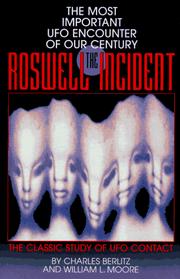
Roswell Incident
Represents the influential pro-Roswell narrative that later claims about bodies and recovery operations were built upon.
UFO Crash at Roswell
Directly examines how Roswell stories developed over time, including witness narratives, myth formation, and explanations for later alien...
Truth About the Ufo Crash at Roswell
Focuses heavily on witness accounts, making it useful for understanding claims later challenged by the Air Force's memory-compression arg...
The Day After Roswell
Provides a prominent body-recovery and extraterrestrial interpretation that contrasts sharply with the test-dummy explanation discussed o...
eBay marketplace picks
Marketplace Samples
Live-tested eBay searches with available results related to this page.


Endnotes
1.
Source: af.mil
Title: U.S. Air Force
Link:https://www.af.mil/The-Roswell-Report/
Source snippet
The Roswell Report...
2.
Source: gutenberg.org
Title: Project Gutenberg
Link:https://www.gutenberg.org/files/63659/63659-h/63659-h.htm
Source snippet
The Roswell Report: [Case Closed]({{ 'case-closed/' | relative_url }}), by James McAndrew—A Project Gutenberg eBook...
3.
Source: nsa.gov
Title: National Security Agency
Link:https://www.nsa.gov/portals/75/documents/news-features/declassified-documents/ufo/report_af_roswell.pdf
4.
Source: nature.com
Link:https://www.nature.com/nature-index/topics/l4/misinformation-effects-on-eyewitness-memory
5.
Source: gutenberg.org
Title: 63659 h
Link:https://www.gutenberg.org/files/63659/old/63659-h/63659-h.htm
6.
Source: time.com
Title: aliens or dummies
Link:https://time.com/archive/6930414/aliens-or-dummies/
7.
Source: pubmed.ncbi.nlm.nih.gov
Title: Pub Med Source monitoring
Link:https://pubmed.ncbi.nlm.nih.gov/8346328/
8.
Source: Wikipedia
Title: Roswell incident
Link:https://en.wikipedia.org/wiki/Roswell_incident
9.
Source: Wikipedia
Link:https://en.wikipedia.org/wiki/The
10.
Source: Wikipedia
Title: Misinformation effect
Link:https://en.wikipedia.org/wiki/Misinformation_effect
11.
Source: pmc.ncbi.nlm.nih.gov
Link:https://pmc.ncbi.nlm.nih.gov/articles/PMC10829763/
12.
Source: pmc.ncbi.nlm.nih.gov
Link:https://pmc.ncbi.nlm.nih.gov/articles/PMC3213001/
13.
Source: britannica.com
Title: Roswell incident
Link:https://www.britannica.com/event/Roswell-incident
14.
Source: history.com
Title: u s air force reports on roswell
Link:https://www.history.com/this-day-in-history/june-24/u-s-air-force-reports-on-roswell
15.
Source: muller.lbl.gov
Title: Roswell Incident
Link:https://muller.lbl.gov/teaching/physics10/Roswell/RoswellIncident.html
16.
Source: nasw.org
Link:https://www.nasw.org/sites/default/files/sciencewriters/html/sum00tex/aliens.htm
17.
Source: jhmovie.fandom.com
Title: Roswell incident
Link:https://jhmovie.fandom.com/wiki/Roswell_incident
Additional References
18.
Source: youtube.com
Link:https://www.youtube.com/watch?v=tCr9ft4yWaI
Source snippet
Why “Listen” Is the Real Twist in Disclosure Day (2026) A Constantly Racing Mind · 12 [views]({{ 'views/' | relative_url }})...
19.
Source: youtube.com
Title: Reel America: “The Roswell Reports”
Link:https://www.youtube.com/watch?v=m7rVSri-7es
Source snippet
The Roswell Report: Case Closed by James McAndrew (Full Audio book)...
20.
Source: youtube.com
Title: Anthropomorphic dummy balloon drop test
Link:https://www.youtube.com/watch?v=R-cVNVxXtOs
Source snippet
Official Reports on the Roswell UFO Incident | USAF Documentary | 1997...
21.
Source: researchgate.net
Link:https://www.researchgate.net/publication/39064700_Memory_Conformity_Can_Eyewitnesses_Influence_Each_Other%27s_Memories_for_an_Event
22.
Source: reddit.com
Link:https://www.reddit.com/r/UnsolvedMysteries/comments/1fug76p/netflix_vol_5_episode_4_the_roswell_ufo_incident/
23.
Source: instagram.com
Link:https://www.instagram.com/p/DYPkxsIjVTd/
24.
Source: facebook.com
Link:https://www.facebook.com/groups/teachpsych/posts/10161670327704349/
25.
Source: rottentomatoes.com
Link:https://www.rottentomatoes.com/tv/roswell
26.
Source: ovid.com
Link:https://www.ovid.com/00006823-199307000-00001
27.
Source: encyclopedia.com
Link:https://www.encyclopedia.com/psychology/encyclopedias-almanacs-transcripts-and-maps/source-monitoring
Topic Tree